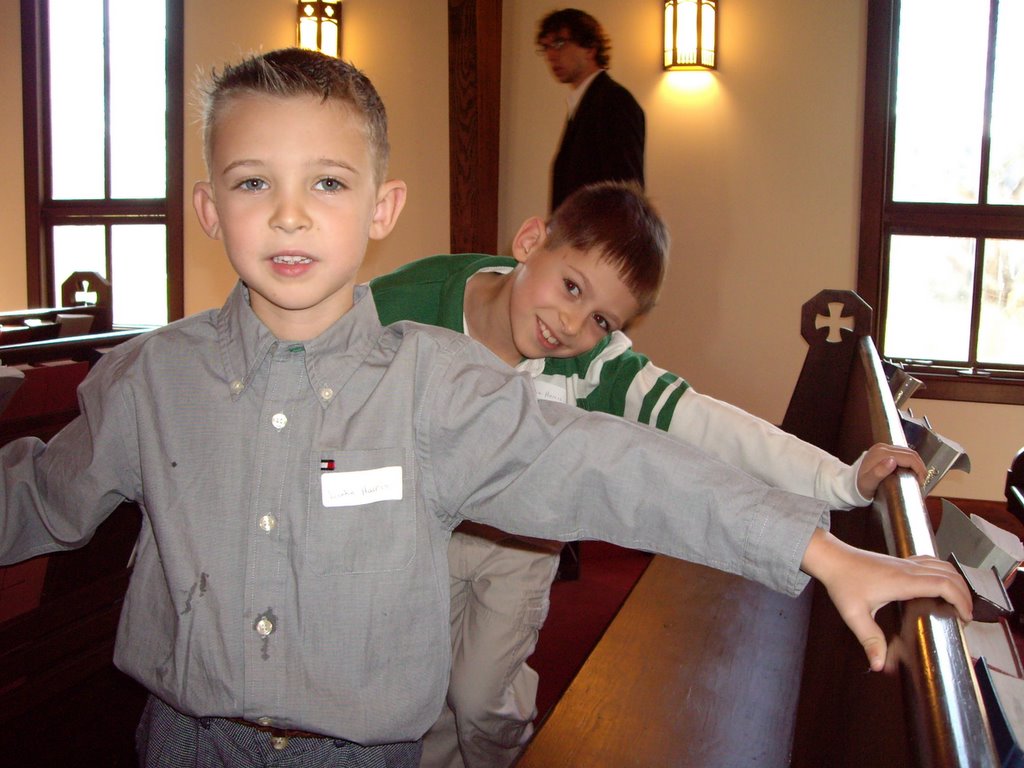
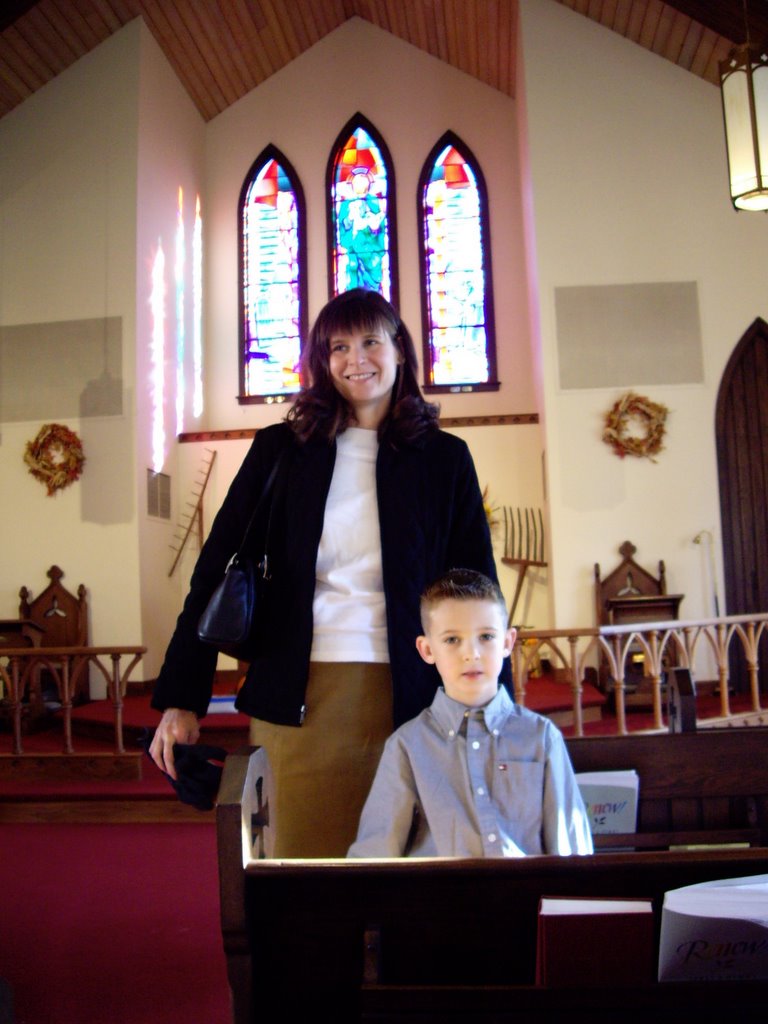
Last of the Thanksgiving photos
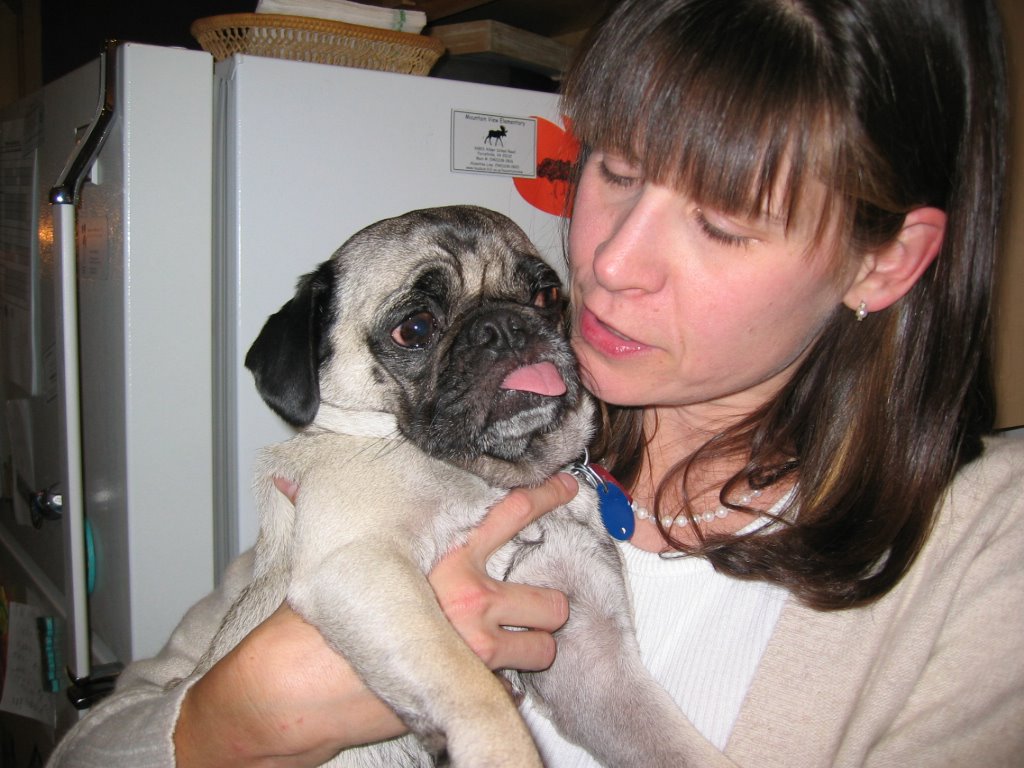

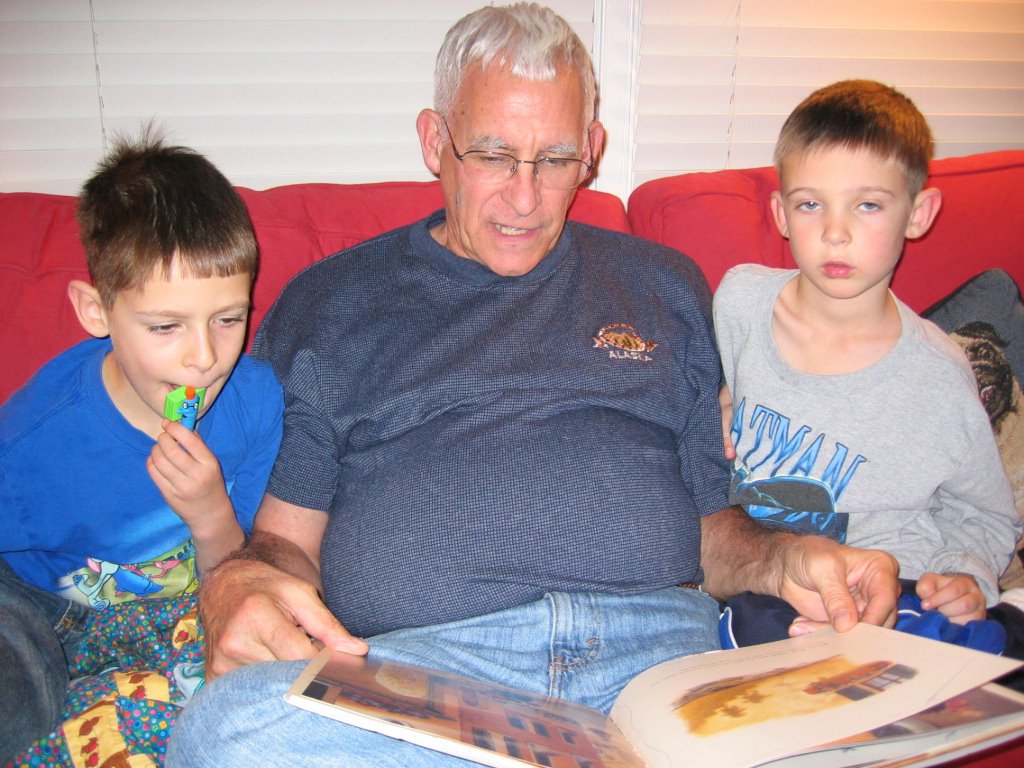
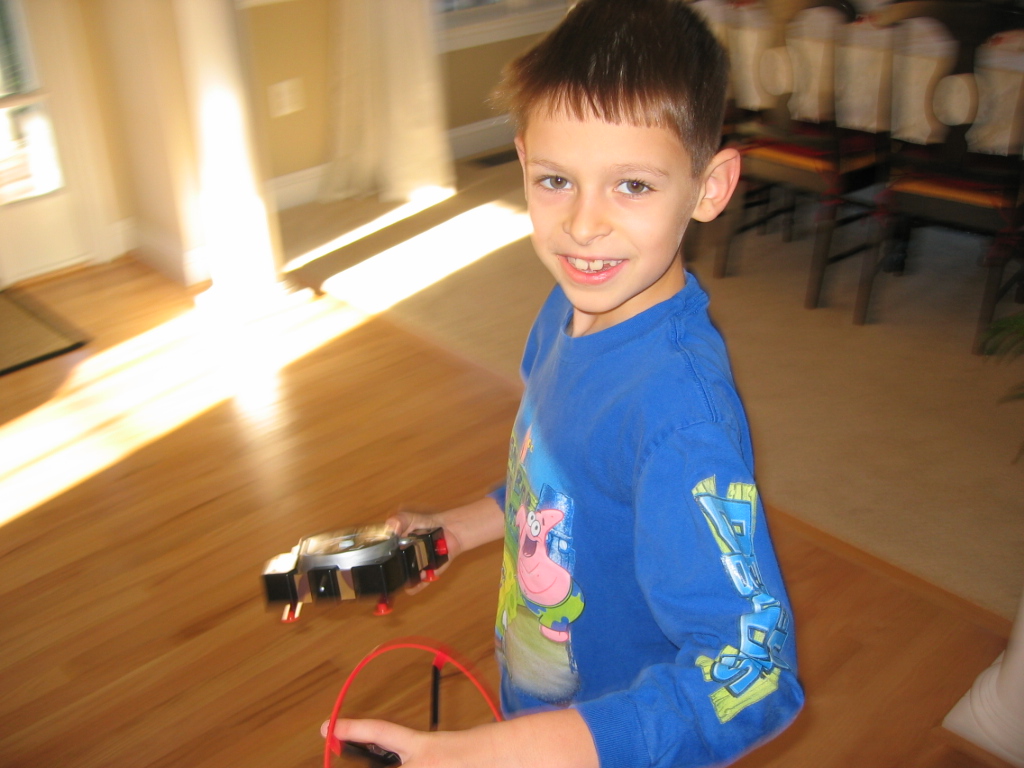 Eddie
Eddie Becky
Becky Becky, Chuck, Kathleen, and Louis
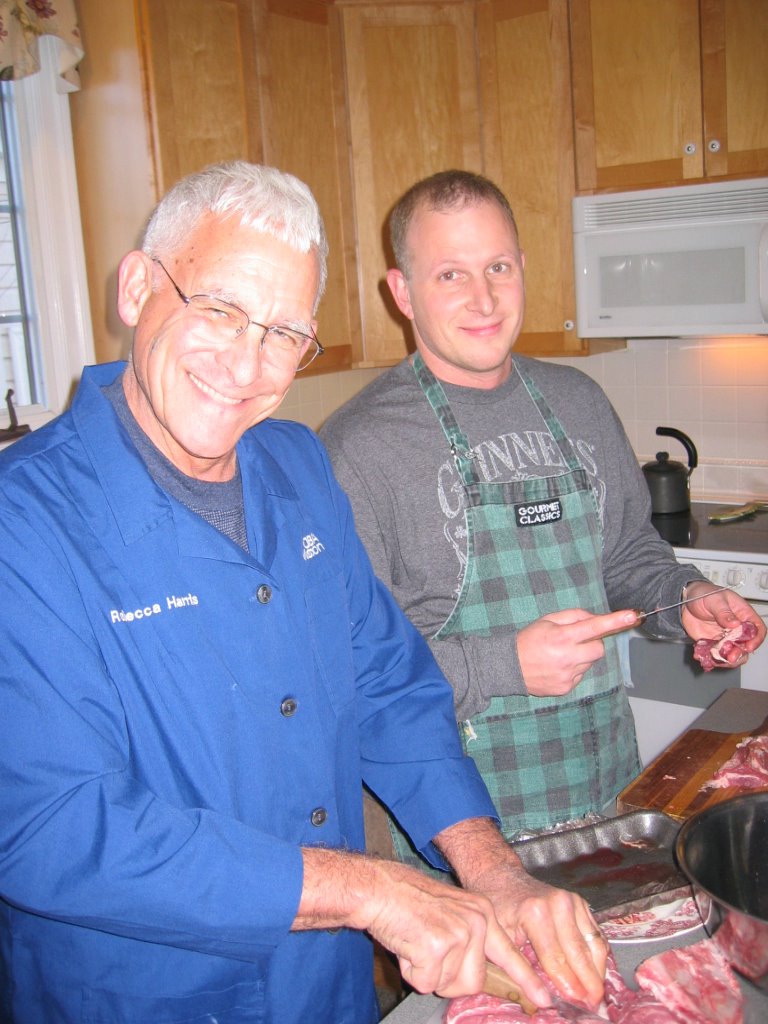 Friday after Thanksgiving... a good day for making sausage! We made ten pounds of Yankee Sage breakfast sausage...
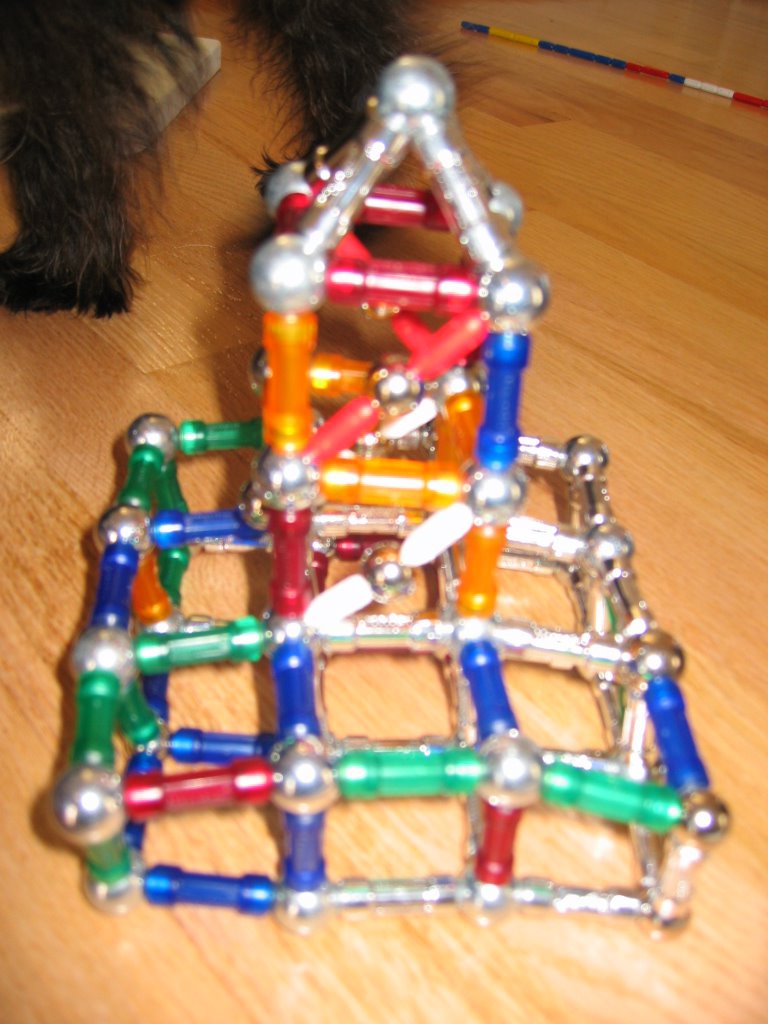 ...while Eddie, Luke and Adolfo made this cool tower.
We had a nice day. We had Chuck, Adolfo, Kathleen and Ed join us for Thanksgiving dinner. Of course, we all ate way too much. But the food was so delicious!
We had turkey, mashed potatoes, stuffing, gravy, rutabaga, green beans, corn, cranberry Waldorf salad, Jell-o salad, pickles, olives and crisp veggies, rolls, and pumpkin and pecan pies. And this year, Kathleen remembered to put the sugar in the pumpkin pie!!! (Thank heaven! Last year's stunk so badly! It was like a side dish!)
Here are some pictures. Remember to click on the pictures to get a larger view: Becky planning and preparing the meal.
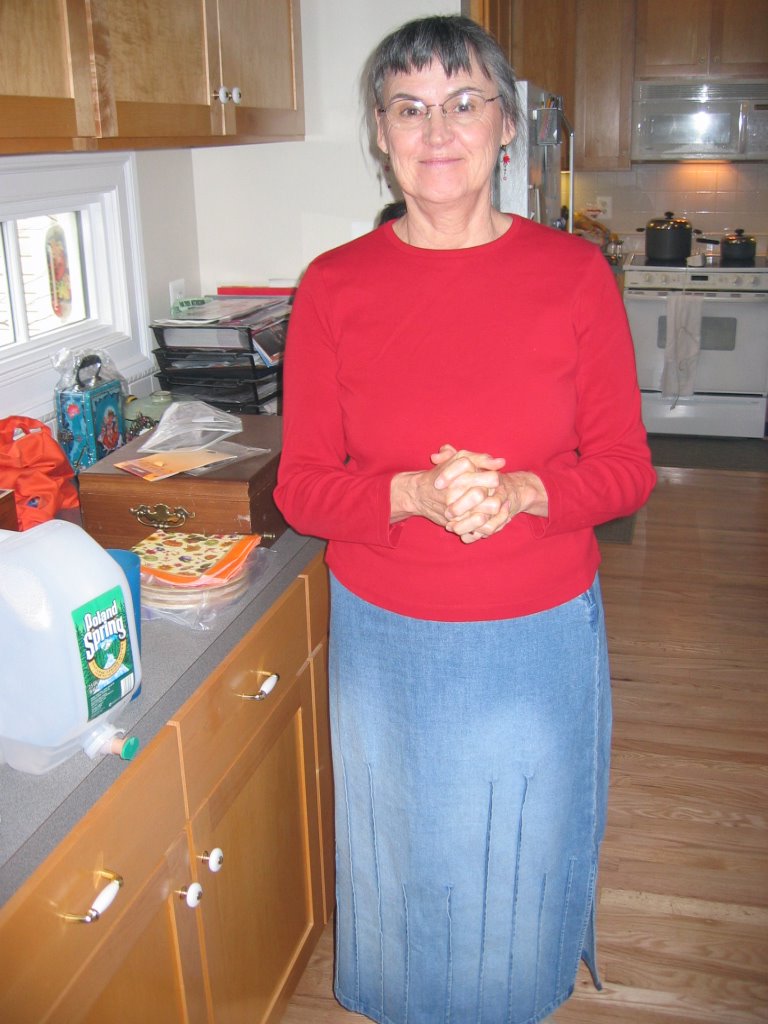 Kathleen helping in the kitchen.
 Ed and Chuck
 Louis
Louis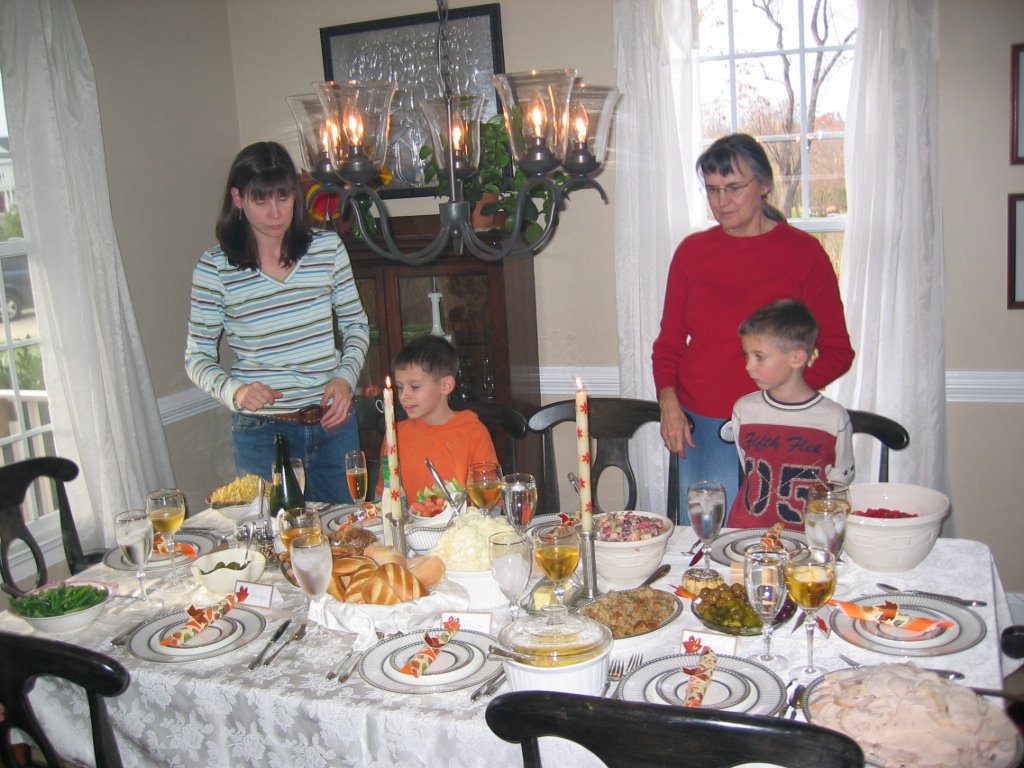 Setting the table.
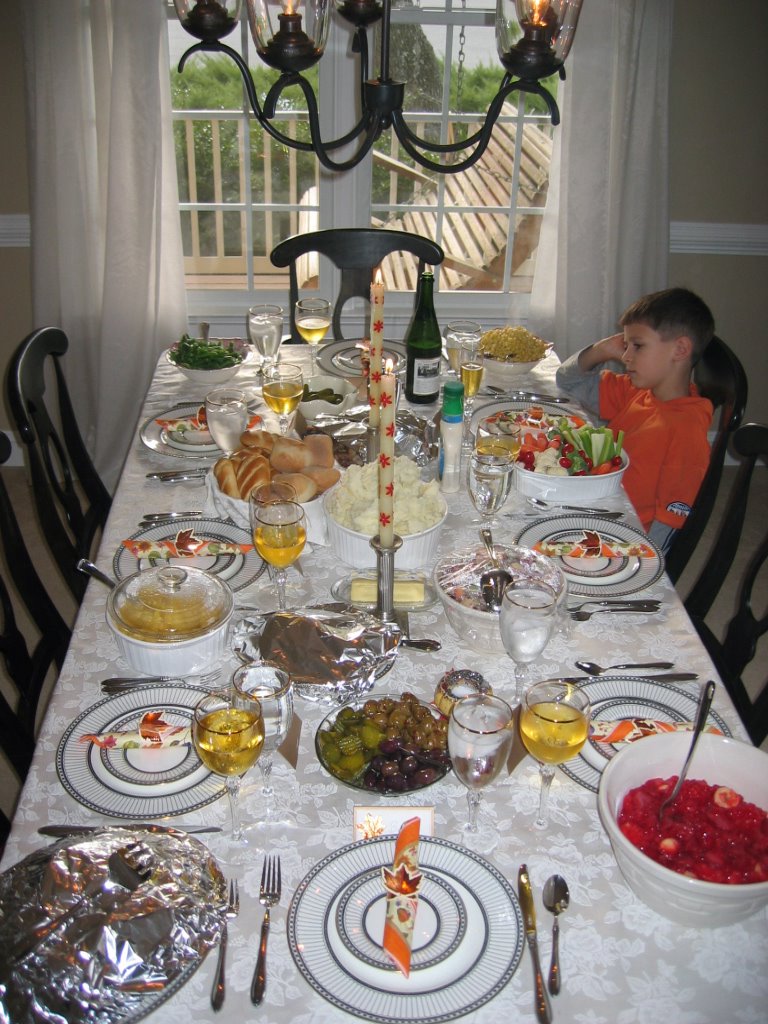 Somebody is ready to eat!
 When is DINNER?!
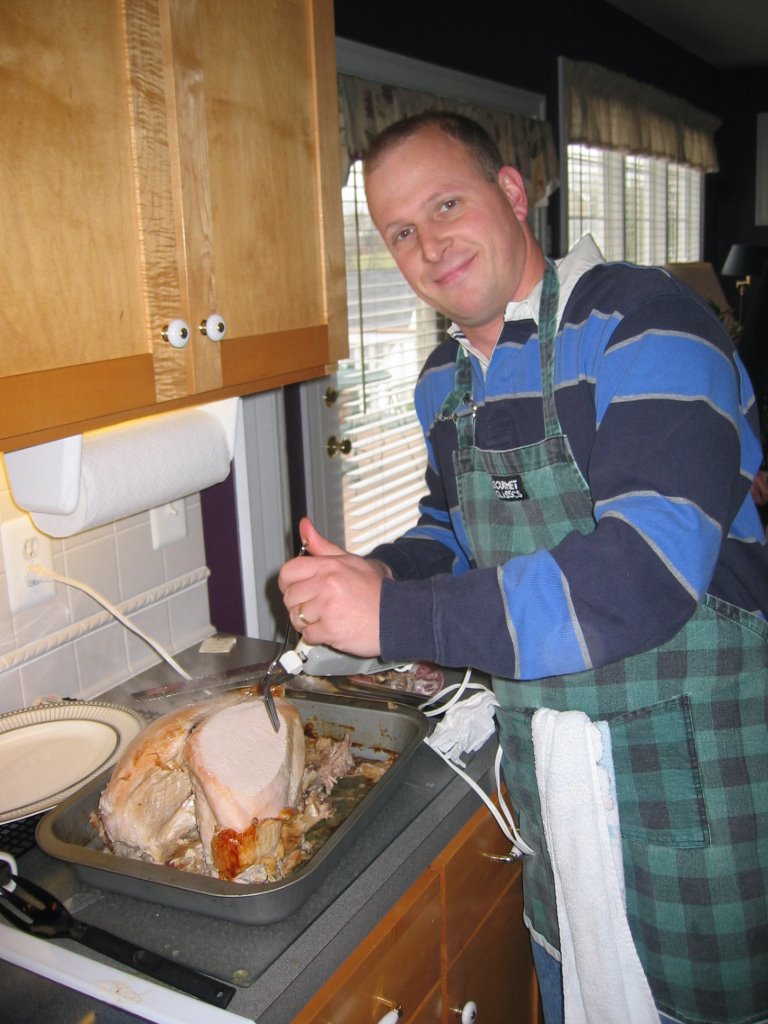 Carving the bird.
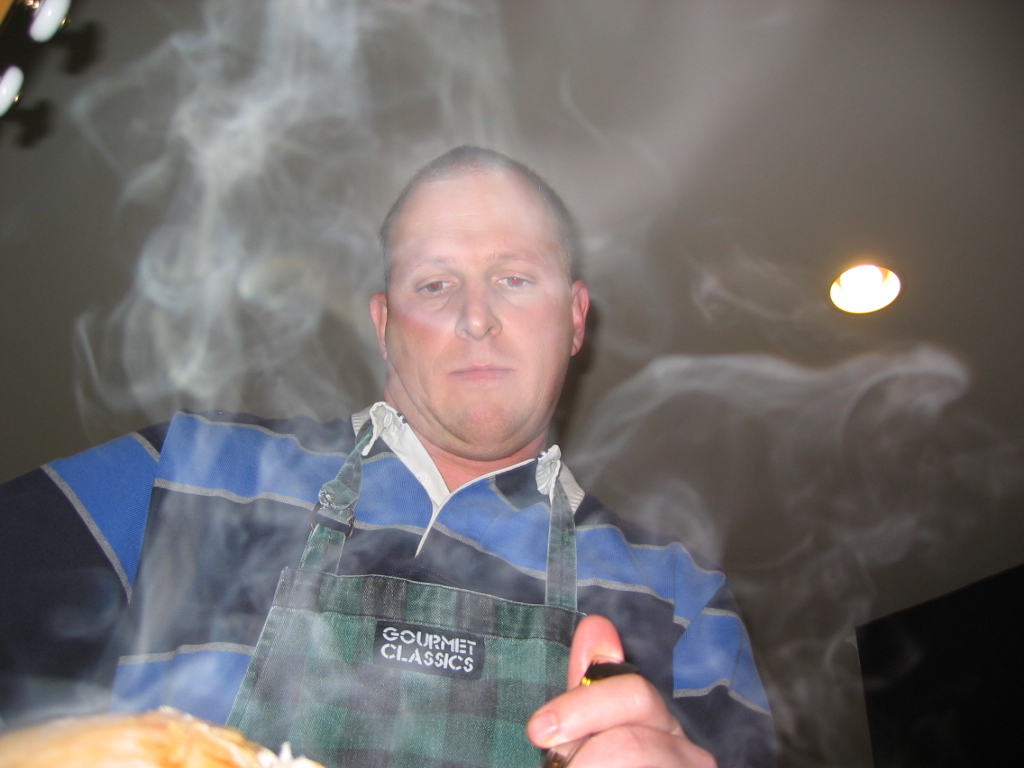 Bird's eye view!
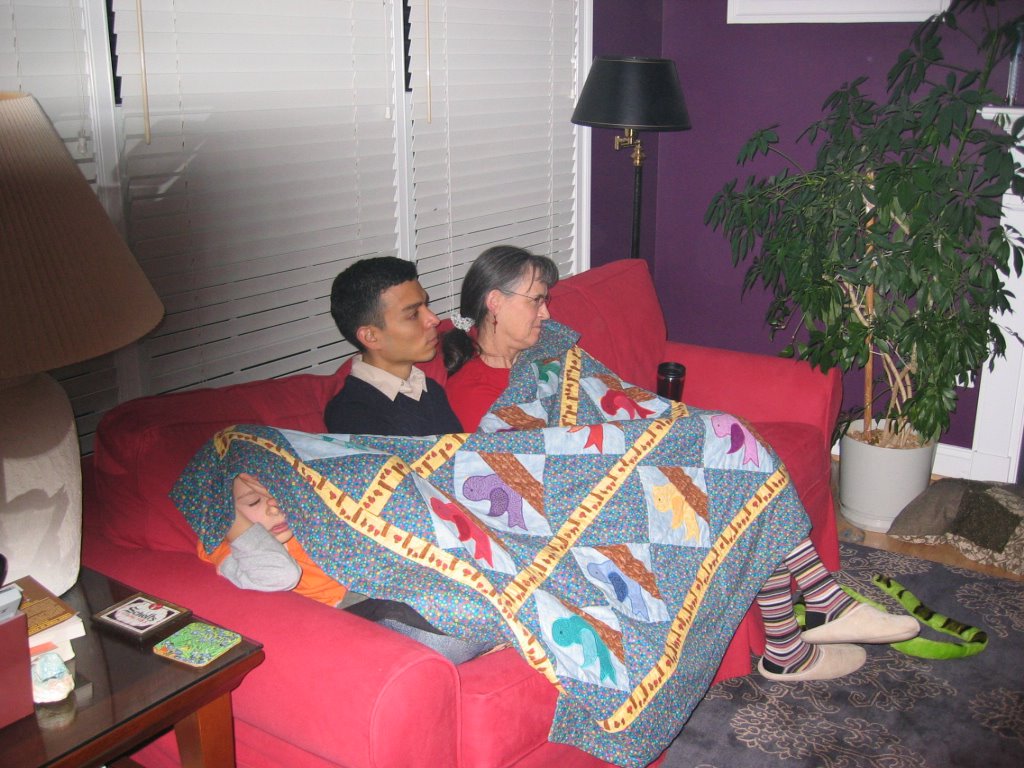 After dinner, everybody watched Return of the Jedi. Kathleen, Adolfo and Eddie are here. (Eddie is hiding his eyes during the scary part with the Emperor.)
 Happy Thanksgiving!!
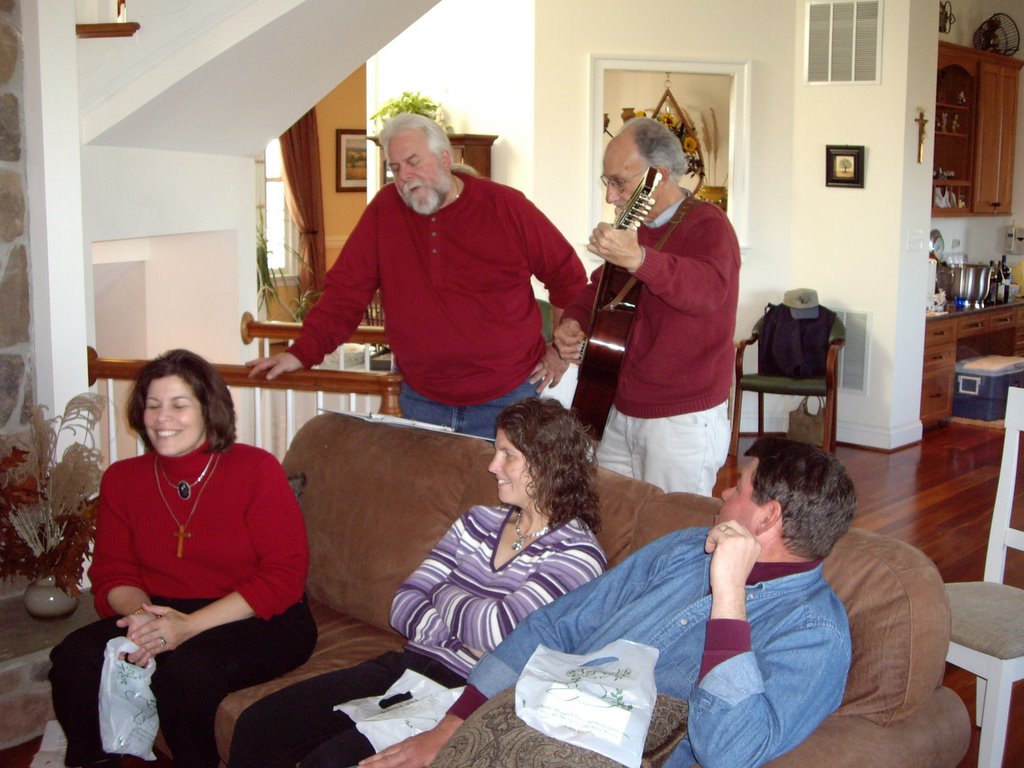
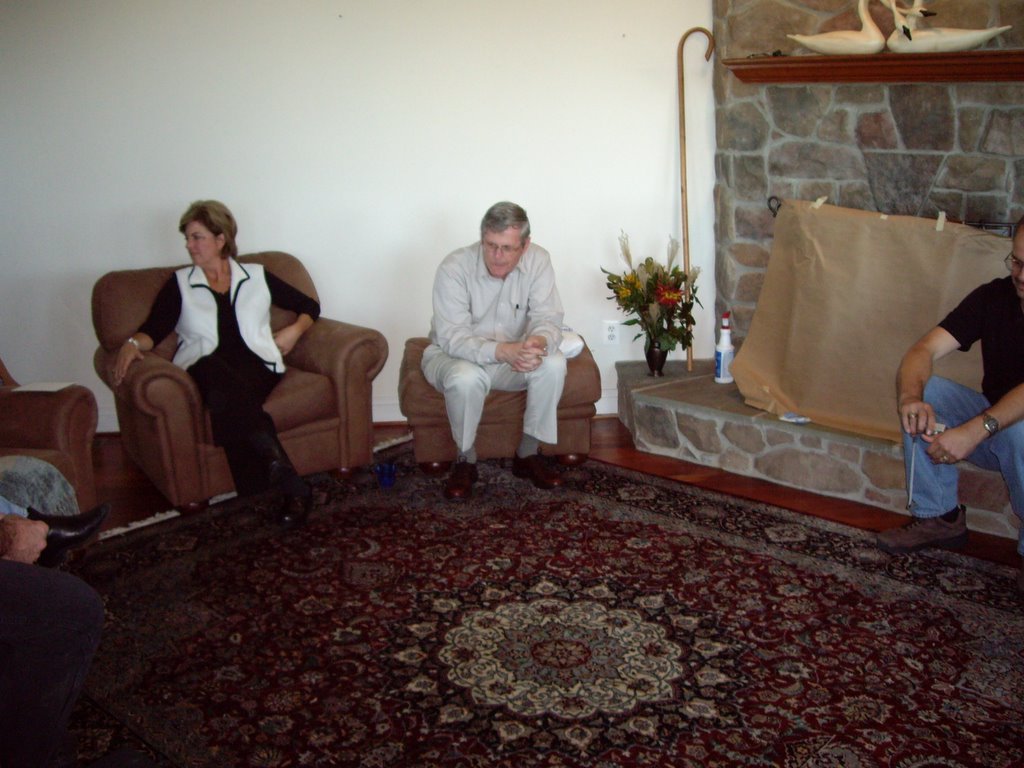 We had a wonderful luncheon reception for George and his Eight Thirty Sinners. This wonderful group of people performed for years at St. Francis de Sales. These are some very wonderful people, talented musicians, and very open-hearted folks. I've never met finer. We'll truly miss this choir.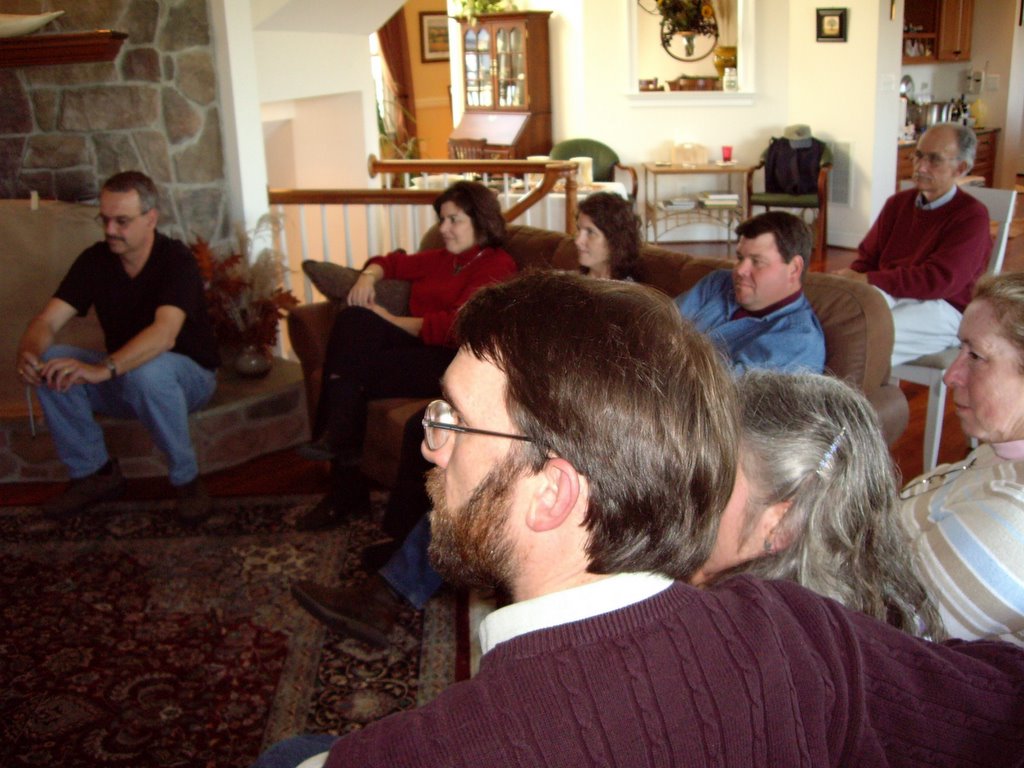


I just got back from two weeks in Denver, working for Lockheed. I'm glad to be back home. This morning, I was awakened at 6:30 by Eddie's singing, and then promptly attacked by two wrestling boys! Then a pug came in and began thrashing me and cleaning my face.
It's good to be home.
Here are some pictures of my trip to Lockheed last week.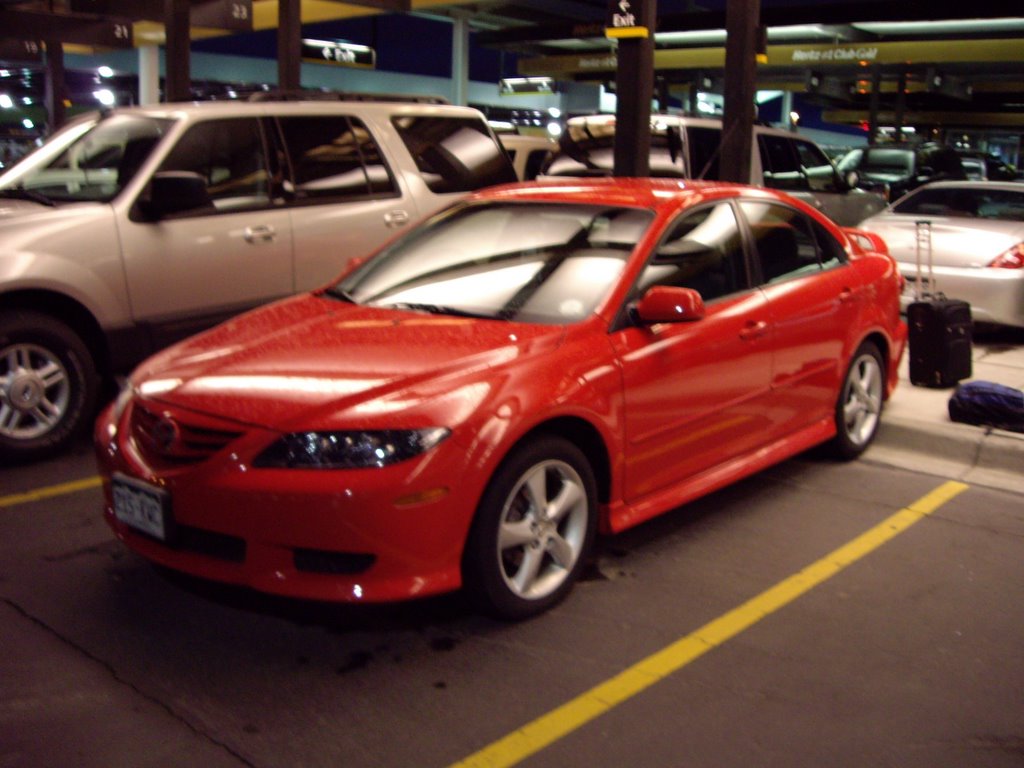
My rental car for the week.
I drank way too much of this in Denver.
Snowy morning at the Hampton Inn.
Green Mountain Rec. Center, where I swam each morning (along with Carmody Rec. Center)
Sunrise, moonset over the Rockies.
Red rocks and downtown Denver peeking through. View from Deer Creek.
Lockheed Martin, Deer Creek Facility
The airport at Denver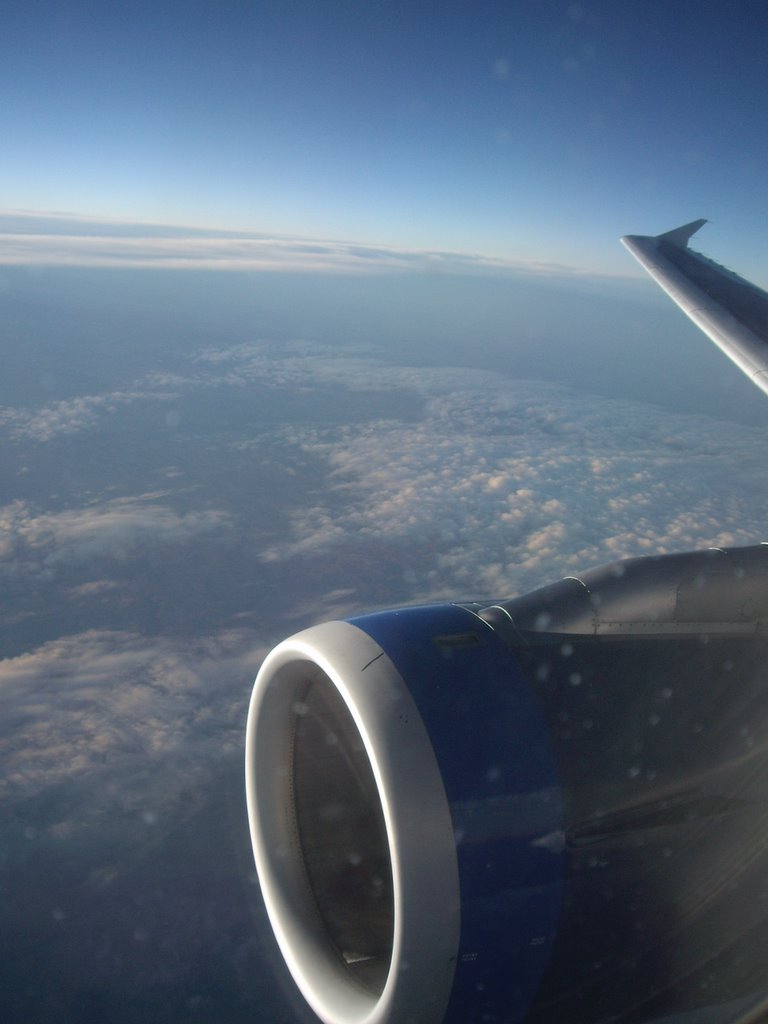
Going home.
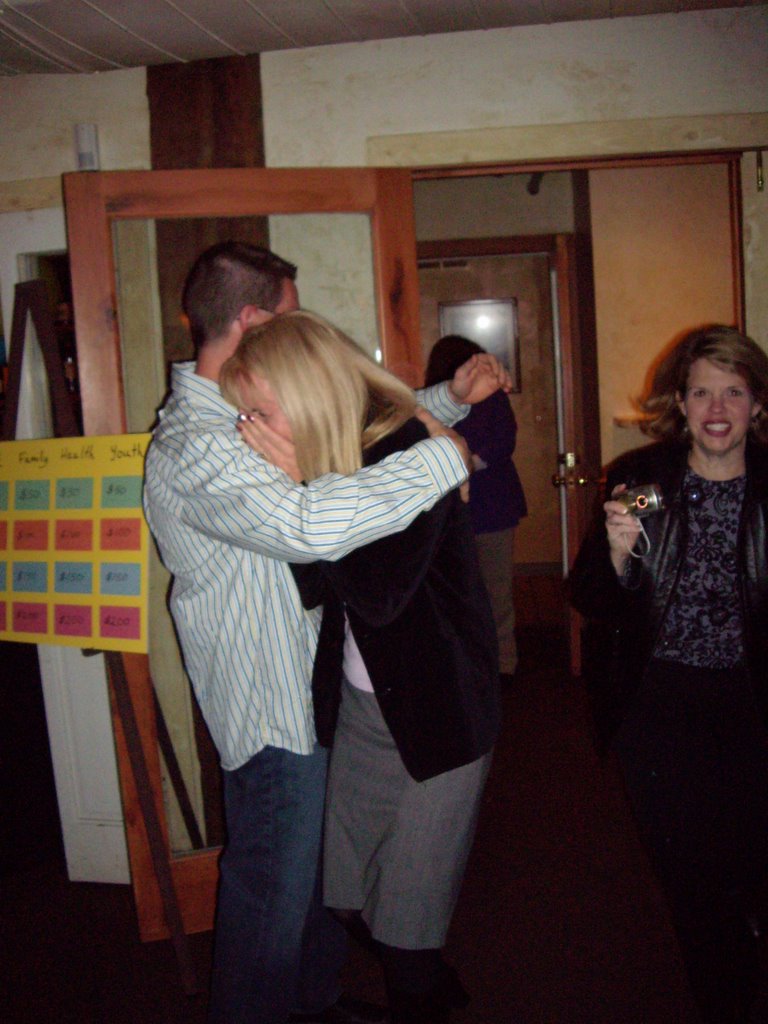
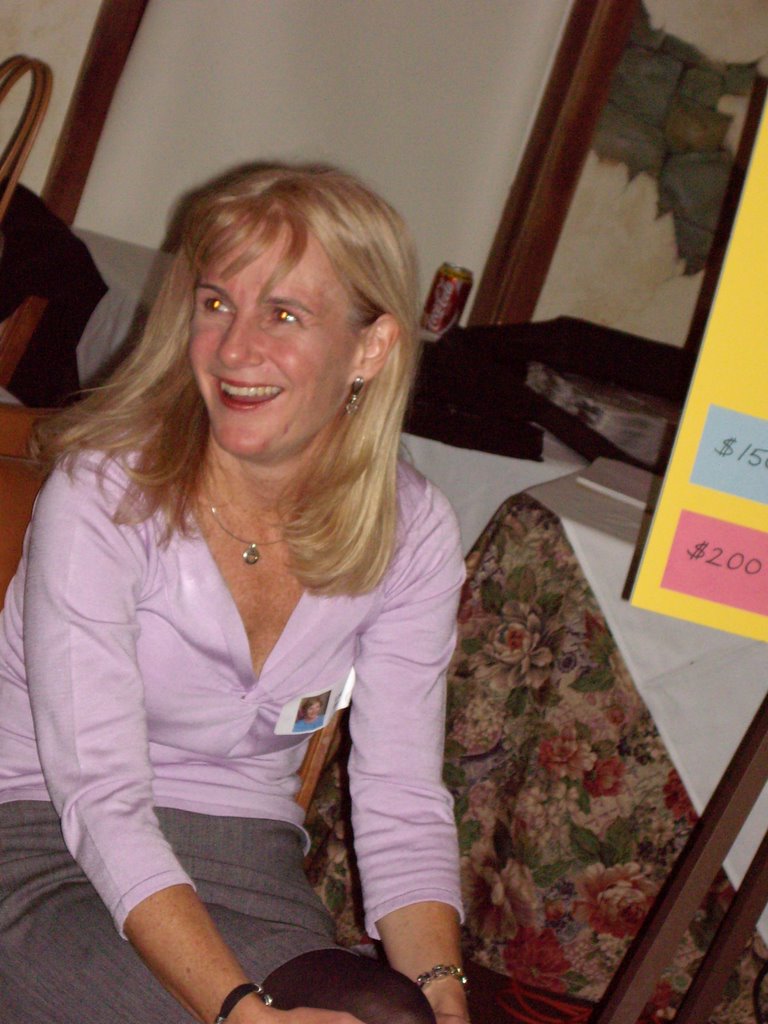
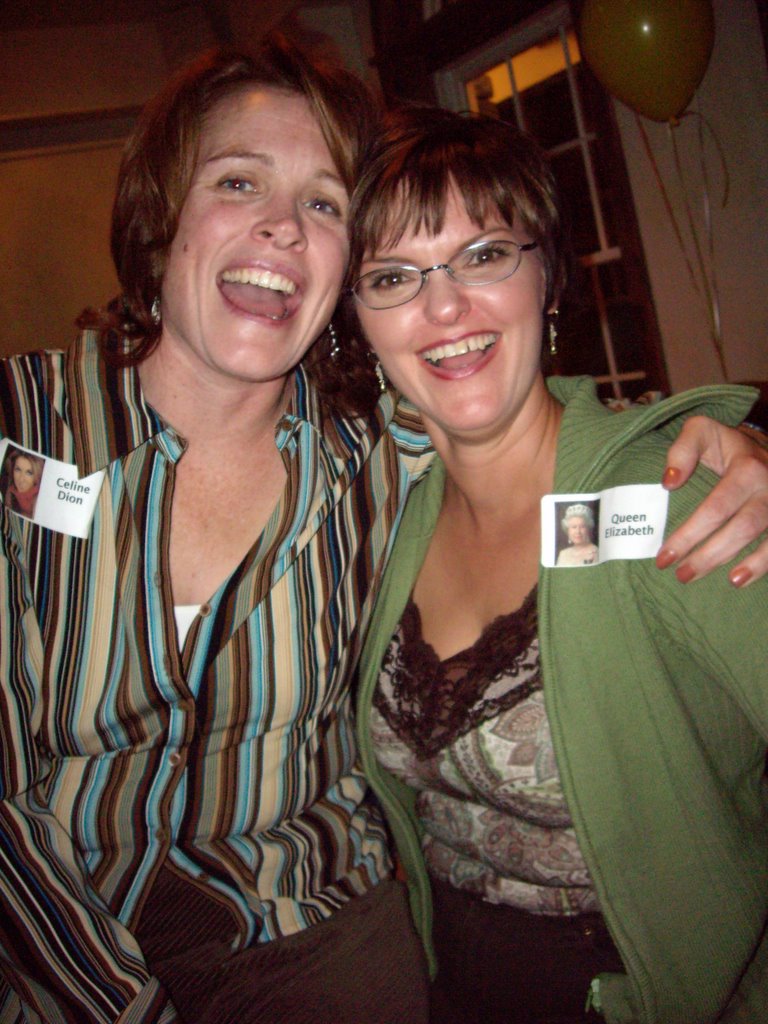
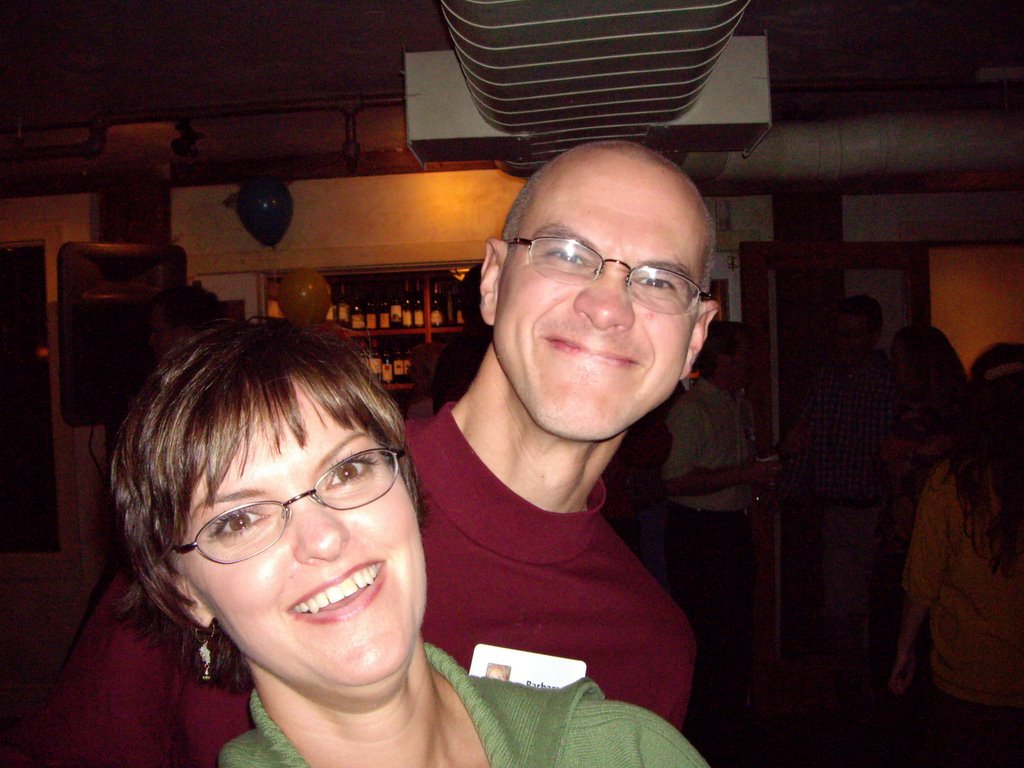
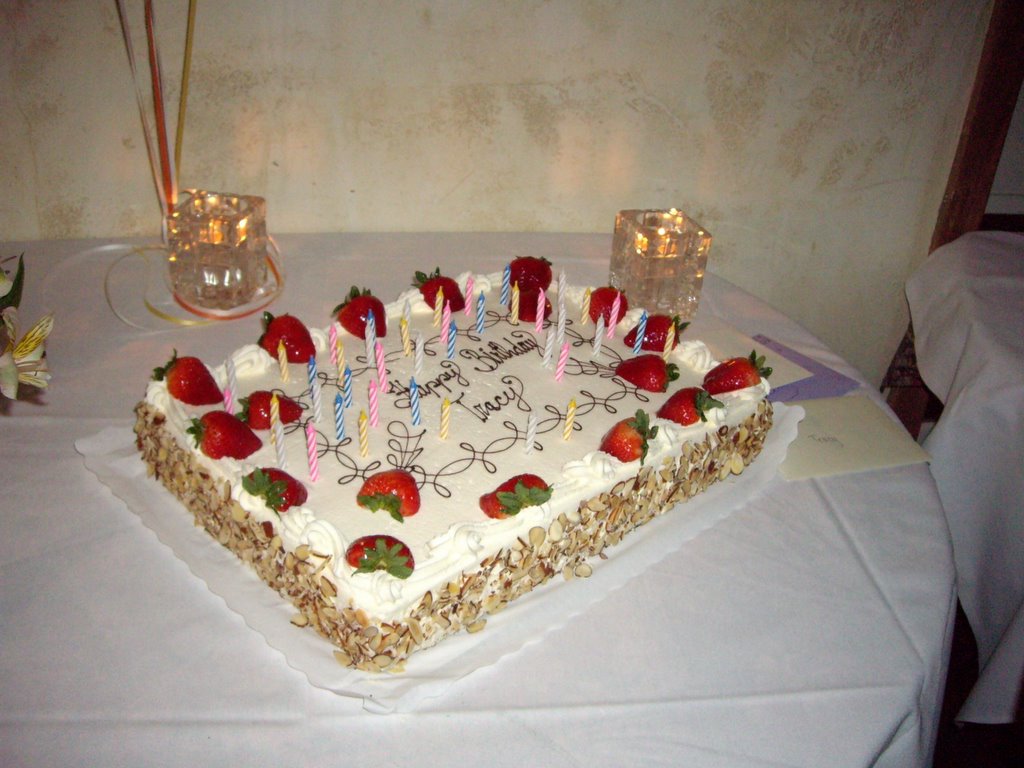
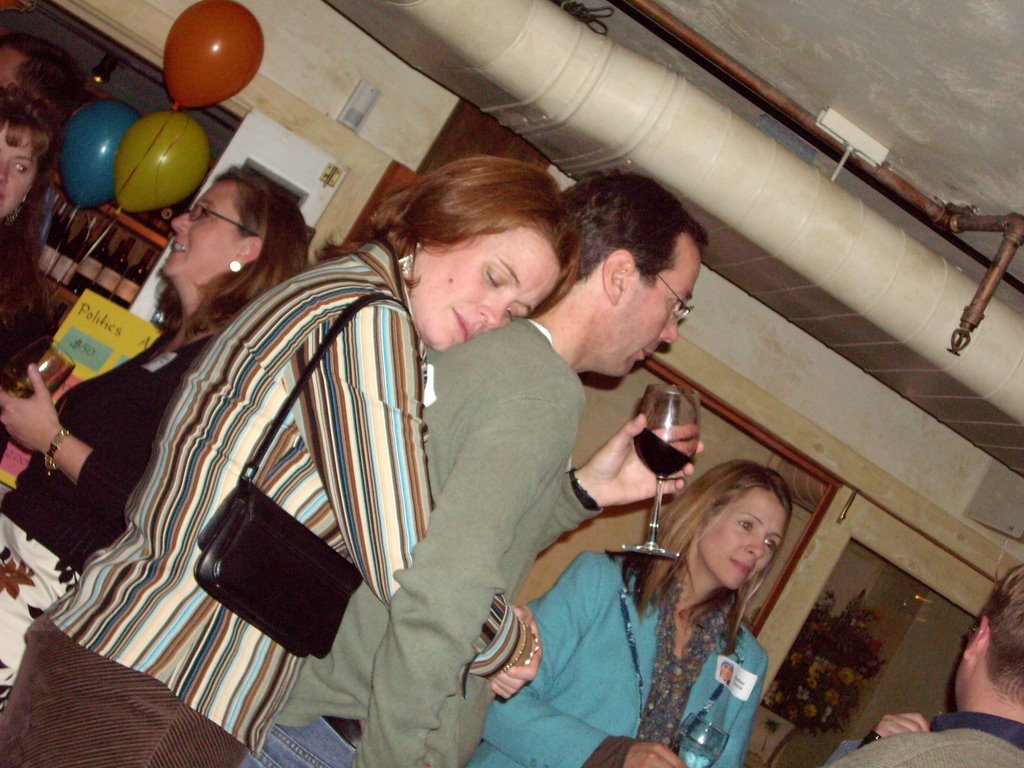
Dennis went all out and rented out the basement of Tuscarora Mill. It was a really nice party, and I'm sure Tracy had a great time. We all did.
Here are some of the pictures:


When Dad got back from
Soon, Dad got his orders for his first tour in
During this first three year tour in
Peter, a native Latvian, was in World War II, and fought with the Russian allies. However, as the Russians began to occupy
Meanwhile, Elisabeth’s husband, who also fought in the war, for the Germans, of course, was listed as missing in action in the Battle of Stalingrad. Both Peter and Elisabeth found themselves together through the misfortunes of war.
Peter could never go back to
Peter, as long as I ever knew him, was a white haired, somewhat short and broad, grandfatherly sort of fellow. Elisabeth had graying dark curly hair, a large figure common among many older German women. They were like Grandparents to us, surrogates for the time we lived in
A few years back, we received a letter from
After I was born, I was raised up in the house in Vogelbach. The house was a contemporary house, modern in its façade and in its styling. In
Peter and Elisabeth’s house was a three level home, and the basement level opened to the patio on the back side. Peter and Elisabeth lived on the top two floors, and we lived in the basement apartment.
I have no memory of the basement apartment; I was much too young. By the time I formed memories of Peter and Elisabeth, we were always visiting guests, welcome in the main parts of their home. We typically visited in their basement, which was finished with a dining room (for Germans are very fond of eating), a wet bar and a pair of my baby shoes dangling from a pipe in the ceiling. Those shoes of mine remained until the very last time we ever saw them.
Back in the very early seventies, when Mom was pregnant with me, there were no methods to determine the sex of the unborn children. People simply guessed or accepted whatever God had given them. Mom swore she had some special sixth sense, however, and swore from the early days in her pregnancy that I would be a boy. She could just tell it, somehow. And lo and behold, Scott Edward was born a healthy baby boy. All of her friends and family were amazed with Mom’s prescience.
When I was two-and-a-half, Mom would again give birth. This time, she swore that it would be a girl. Again, she just knew it. All of her friends and family this time, not doubting her judgment, would purchase many pink and purple outfits, blankets, and toys, sure of the girl to come. And it was to everybody’s great surprise, especially my mother’s, when Michelle had to be quickly renamed to Michael. I have always viewed it as significant that Michael was defying my mother’s wishes even upon taking his first breath.
The night Mom went into labor with Mike, Dad took her to the hospital at Lanstuhl and left me in the care of Peter and Elisabeth. Since Peter and Elisabeth never had kids of their own, they probably hand their hands full. I was a hyperactive two-year old, and quite a lot to handle.
Mike was born during the night, and the next morning, Dad came home to check on me and get some things for the hospital. When he arrived, Peter and Elisabeth and I were all seated around the table eating breakfast. They had me dressed, but my diaper had no pins in it and was simply “stuffed” into my pants. They were feeding me a breakfast of Brötchen (small rolls), butter, sausages, and coffee.
Setting the tone for decades to come, my rivalry with Mike would immediately begin. Having been the only child for two and a half years, I was in no mood to accept this new kid into our family. Shortly after Mike came home, Mom caught me trying to wheel him out of the house in his carriage. She would catch me just before I rolled him into the street.
Mike and I, though two and a half years apart, would grow up almost as twins. I was small for my size, and since we both had white-blonde hair and fine fair German features, we were often mistaken for twins. Honestly, though, I never saw it myself and found it annoying when people would make the comparison.
“Really,” I would think, “I’m much handsomer.”
Actually, looking back at the old photos, we were really quite a lot alike. We looked like a pair of Hummels, cherry red cheeks, smiling and loving each other like brothers. In fact, we would spend much more time fighting than the pictures told.
As older kids, visiting Peter and Elisabeth was always a treat. We’d ring the doorbell and Elisabeth would answer, wearing an apron over her flowered dresses. She’d always be preparing some kind of enormous feast for us each time we visited.
First thing she’d do is escort Mike and I into her Keller (her downstairs pantry). This was a dark, cool room with shelves all around. The shelves were full of canned fruits, vegetables, and of course, our favorite, chocolate bars. In
Then we would visit in their downstairs dining room, the parents talking for hours, while Mike and I played in the backyard. Their backyard was large and had a great old plum tree growing in it, but the plums which grew on it were yellow, not purple. The tree’s branches were broad and widely spaced, just perfect for climbing. I remember once being sent up the tree by Peter to collect plums, which we ate as a snack later that day.
The backyard also backed up onto a train track, and occasionally, we walk down the road across the tracks. A fenced meadow lie across the tracks, and we’d often take an apple or sugar cubes to feed the old mare that lived in that meadow.
Inevitably, we’d always have supper at Peter and Elisabeth’s. Elisabeth would make a fine German meal of Wienerschnitzel, Gulaschsuppe, potato salad, dumplings, and boiled vegetables. We’d eat and eat and eat, and Elisabeth wouldn’t be satisfied until we’d had at least three plates each. I was always happy to oblige, for I had inherited my appetite from my mother. Elisabeth always enjoyed feeding me, because I was a bottomless pit. Nothing is more flattering to a German than someone gluttonously devouring their food. This is just what I did. If I cleaned my plate, Elisabeth would fill it again, until after many rounds of this, I could clean it no more.
Then, stuffed to the gills, Peter would walk over to the bar and pull out the bottle of Boonekamp. Boonekamp is a regional liquor, called a Magenbitter, similar to Jaegermeister. However, Boonekamp has the unique addition of paregoric, which is an opium based digestive.
Peter would pour everybody, including us kids, a shot of Boonekamp. We’d all shout, “Bis Boden see,” which means, “Until you see the bottom!” (Of the glass, that is.)
The liquor was bitter and burnt going down, and we’d all screw up our faces from the flavor. But stuffed to the point of breaking from the dinner, the Boonekamp would soon spread like a warm wave over us, and our stomachs would feel lightened.
“It’s good for the digestive,” Elisabeth would always announce.
Then we’d have room for dessert, perhaps a strudel or a cake, always made from scratch by Elisabeth.
Once when we were visiting, I learned a bit more about foreign cultures, though in a very clumsy way. I was perhaps eight years old, and Mike five or six. I told my father that I needed to go to the bathroom.
“Number two,” I suggested.
Mike had to go too. So we went together to Elisabeth’s private bathroom upstairs. We weren’t often in their upstairs areas. It was always clean and nice and decorated in exactly the way a place is that never sees children, like a hotel lobby or a museum.
We went into Elisabeth’s bathroom, ready to fight over who went first, when we noticed there were two commodes sitting side by side. Except one looked a little funny, it had no tank on it. However, we found this cool and interesting that a house should have a bathroom with two toilets, so Mike settled himself upon the ordinary one, and I took the exotic new toilet.
In fact, what I quickly learned was that I had pooped in the bidet. I had never seen a bidet before, and didn’t even know what such a thing was for. But there it was, a mess that wouldn’t flush down. Embarrassed, but unable to do anything about it, I was forced to go back to the room full of adults and announce that I couldn’t get the toilet to flush.
Exasperated, but not quite yet knowing what lay in store for him, my father parted company with Peter at the bar, and walked back with me to the bathroom. What he found there horrified him. He knew, then and there, that he would have to clean up this mess, and there’s no easy way to do that except manually. Moments like these are what give our parents reserved seats in heaven. My father cleaned up the mess, and I learned what a bidet was really used for.
Grandpa Harris was a good man and a quiet man. He was typically one who didn't speak unless he had something useful to say, and spent his time quietly listening to other people. He was a gentle, patient and kind man.
Grandpa was a relatively short man, very round, with a distinct black flattop that was never grey, What Dad lacked in hair, his own Dad made up for. Here was the perfect example of genes skipping a generation.
Actually, we’re pretty sure Dad inherited his baldness from Grandma’s side, since Grandma Harris too had very little hair. Though she had grey hair on every part of her head, it was so thin you could see her scalp from any angle. She’d get her hair done at the hairdressers, and proudly ask you how it looked, and didn’t she look pretty? And I would look through her hair, see her scalp, and tell her, “Yes, it looked great!”
The thing I remember most about Grandpa Harris was his smile. Even in his seventies, when Grandpa Harris would smile, he'd look like a seven year old boy who'd been caught kissing the girls.
Grandpa Harris also worked at Conoco, but as a machinist. He never talked much about work, and rarely spoke of his boyhood family, so I have very little knowledge of his family life. I do know that most of his family is today in Ohio, Pennsylvania and California, though we don't keep in touch with any of them,
Grandpa Harris would keep busy helping other people. Whether it was mowing Aunt Marnie's yard in Blackwater, selling VFW charity pansies outside Wal-Mart, or rebuilding a shelf that Grandma wanted rebuilt, Grandpa always found his expression of love in his hands.
Grandpa was enormously patient, and nobody could try patience like I could. As a hyperactive youth, I was the ultimate test for most adults. I have vivid memories of driving substitute teachers mad with rage, literally being chased around the room by them. But Grandpa’s patience knew no end. He could change a set of tires on his car with my help. He’d patiently hand me the lug nuts, and I’d work alongside him. If I dropped a nut, or kicked a tool, he’d just grab it and continue in his work. Never a word.
Grandpa Harris was also a man of principle. As a machinist at Conoco, he had never joined the union because he didn't care much for it. When they'd strike, he'd buck the picket lines and go on into work. And some days, Grandpa would open his lunchbox to find someone had shit in it. He'd quietly just close the lunchbox back up, go hungry that day, and continue with his work, never budging, never letting it bother him.
He was strong that way.
My days spent with Grandpa and Grandma as a kid were filled with games of penny-ante poker, UNO, hand-held electronic games, and watching whatever game shows were popular at the time. Game shows like Card Sharks, Tic-Tac-Dough, Press Your Luck and Wheel of Fortune were the staple television diet at the Harris house. During the school-year we'd learn from books, but in the summer, when in Ponca, we'd learn how to play games.
Much like Grandpa Guier, Grandma Harris was a gifted story teller. However, her stories were much more interactive and always spoke to some aspect of her family life. I could sit and listen to Grandma tell stories endlessly. It always seemed to me that she had lived such an interesting life.
Grandma Harris grew up the daughter of a dirt-poor hillbilly family in eastern Oklahoma. She had five siblings, all with very hillbilly sounding names. Her sisters included Eula, Bill (yes, Bill was a girl), Elina, and herself, Venita. Her brothers were Wayne and Henry.
Grandma, as long as I knew her, was always nearly invalid with an acute case of hypochondria. She definitely had bad knees, which had both been replaced a number of times because of her "Author-it is.” But the rest of her illness, in my opinion was mostly weight related and mental.
She was a heavy-set woman, and that made it difficult for her to get around on her bad legs. It also contributed to her bad back and diabetes. Yet, it seemed to me that if she'd get out more, get more exercise, she'd feel better.
Instead, she usually just took an alarming number of pills that the quack doctors of Ponca would endlessly prescribe.
In contrast, her stories of her own youth were always of a girl vital with energy and the joy of life.
Grandma's back, she claimed, had become bad after she had fallen from a vine she was swinging on while camping as a kid. Indeed, when I first heard this story, I found it incredible that this recliner-bound woman should ever mount a vine and swing through the air like Tarzan. For one, it sounded like great fun, and for two, I didn't think Grandma's were supposed to do that.
My favorite story was another camping story. Grandma and Grandpa Harris had gone camping and fishing with Uncle Dale and Aunt Linda, who had been recently married and were still without kids.
The sleeping arrangements had been set: Grandma and Aunt Linda were to sleep in one tent, while Grandpa and Uncle Dale were to sleep in the other.
It was past dusk, and everyone was in the quiet conversation that precedes their drifting off for the night. Their bellies were blissfully full of the fish caught that the day.
Grandma and Aunt Linda had their tents canvas flaps open, with the screen shut, allowing the cool night air into the tent.
She began to focus on a fleck outside her tent. Realizing what she was about to ask was sounded silly, she very quietly whispered, "Linda, is that a bug or a cow?"
Sounds travels well at night in tents.
"HARRR, HARR, HARRR!!" Uncle Dale let loose with a rowdy uproar of laughter.
Unable to control his amusement, he mocked back, "A bug or a cow? A bug or a cow?! How do you confuse a bug and a cow?"
Grandma, embarrassed by the comment, would very logically explain how she could not tell in the twilight whether it was a bug on the screen or a cow on the horizon.
She'd again express her dissatisfaction with Dale, that he should not be listening to her private conversation with Linda.
This story always brought laughter to our family, whenever it was told. Soon, it would be incorporated into family legend and would be told proudly by most of the other members of the family.
Even at Grandma's funeral, when she had finally succumbed to cancer, the preacher told the tale by simply saying, "I'll only have to say this one thing, and most of y'all will know what I mean, 'Is that a bug or a cow?"'
It would bring a smile to all our faces that day.
I got to know Grandpa Guier much better after Grandma died. There was more time to spend with him alone, and he seemed more patient with me as I grew older.
From my perspective, Grandpa Guier was great entertainment. Grandpa would take us on long drives through the Oklahoma ranch country in his El Camino.
We'd arrive at a small nondescript gravel road entering a fenced in bit of ranch land. Grandpa would have Mike or me get out and open the gate, then we'd drive through it, crunching along on a gravel road to a private catfish pond that Grandpa kept stocked.
We'd fish for catfish using rods and stinkbait that Grandpa had bought. Stinkbait is about the nastiest substance known to man, but catfish love it. It smells of equal parts shit and rancid beef.
You'd take a big glop of it in your hands, form it into a ball like Play-doh, and glob it onto the end of a hook. It was a relief when it went under the surface of the water and the smell quickly blew away.
Though Mike and I spent more time playing with the tackle box and arguing than fishing, inevitably we'd still catch a couple catfish as big as our arms. Grandpa, a much more serious sportsman, would always catch a dozen or so and would chide us for not paying attention or for not being quiet enough.
Occasionally, a small black point would protrude from the calm waters in the middle of the lake, and Grandpa would quickly throw down his rod, grab his rifle and take aim.
Suddenly, there'd be a sharp crack, a splash of water, and the required litany of, "I got you, you son-of-a-bitchin' turtle!"
If Grandpa caught a turtle on his line, he'd always haul it in and crush its shell with his boot.
My brother and I were always horrified by the killing of the turtles, which we both thought were cute little animals that make great pets. We always regarded as sinful the killing anything higher on the evolutionary scale than a fish. But Grandpa despised turtles for eating his catfish. I've never seen a turtle eat a catfish, though I supposed they must. We certainly enjoyed eating catfish, so why shouldn't the turtle as well?
When we'd return from a day of fishing, we'd have to help Grandpa skin the catfish. By this time, I had descaled many "regular" fish like bass, crappie, and perch, and had even helped with the disemboweling and decapitation procedure. No problem.
But a catfish is an entirely different animal. It has no scales. Instead has a smooth human-like skin.
Grandpa's methods seemed barbaric to me. But I suppose there’s no other way. He'd place the catfish on a board and hammer a large nail through its head. He'd then slit the skin with his knife, right behind the gills, and literally peel it back to the tail. Watching, I was filled with horror and felt my stomach climbing into my throat. I had to excuse myself from the yard into the house. I have never cleaned a catfish since.
Grandpa Guier has been renowned, somewhat dubiously, for his gift of telling long winded tales.
He's the particular kind of person that will tell you a story, and then tell you the same exact story again and again every time he sees you. Interestingly, the stories develop further in plot each time they are told.
Countless times that we've been in public with Grandpa, we've been embarrassed by his ability to walk up to a complete stranger and begin talking about how the federal highway system is completely inadequate for the transportation of wheat, or how his favorite bird dog, Duke, was the smartest dog in the world.
Grandpa knew no social boundaries where his stories were involved. In that way, he was an equal-opportunity teller. His stories were told for the enlightenment of his audience, whether they wanted it or not.
As an example, one of his stories illustrated (in his mind) how open minded he was. He would approach every black person he met and tell them this tale.
"You know, I worked with a black man in Conoco once," Grandpa'd say as some sort of introduction. Sometimes, he'd preface it with, "You're black…," as if they didn’t already know that.
Grandpa would continue without a breath.
"Yup, Ol’ Joe, a black man like yourself, and I were workin' in the lab back at Conoco, when I explained to Joe that a bunch of niggers in the other lab weren't worth a good goddamn.
"'Ken,' he'd say to me, 'I don't care much for that term, nigger.'
"What? ‘Nigger?’ Why, you got it all wrong Joe! There's plenty of good black folks and bad black folks in the world. Now, you're one of the good black folks, but the bad ones, those are niggers. Heck, there’s even bad white folks I call niggers."
Once, when we were stopped at a highway rest-stop, there was a forty-something black man walking his terrier in the grass. The dog was busy doing “his business”, and the man was trapped.
Grandpa told this man his story. The man stood motionless and feigned the polite interest people feign when they don’t know what else to do.
When the dog was done, he politely excused himself and nearly sprinted back to his car.
People were always leaving Grandpa in a hurry. Better split before the next story starts!
Most of Grandpa's other stories were just as colorful. Grandpa was famous for his stories of the days in the Navy.
One particular story was of how he single-handedly saved the ship he was on when one of the engines failed, while they were under fire from the "Japs."
Grandpa hated Japs as much as he hated French.
Mind you, this story grew with every telling. At the first telling, Grandpa worked in the engine room, when the big diesel engines failed. Being responsible for the engine, he was forced to fix the engine by climbing inside the engine. I'm not much of an expert on WWII naval warships, but I take it their engines are big enough to house humans, should the need arise.
By the second telling, the engine was on fire and ready to explode. By the third telling, he was forced to strip naked before entering the engine, so his clothes wouldn't catch on fire from the grease and heat. By the fourth and final telling that I've heard, he was above the engine deck when learned that the engine was in bad shape. He sprinted to the engine room at full speed, and rather than waste time on the stairs, vaulted himself onto the pipes on the ceiling, performing an Olympic-worthy vault, complete with a two-point landing in front of the engine, ready to disrobe and climb inside. (I swear I am not making this up!)
There were so many navy stories, yet one story in particular stands out as the Kenneth Riley Guier, Sr. Signature Story. If you've heard this story, you've had the distinct pleasure of meeting Grandpa Guier.
"We were on shore leave in San Francisco," he'd start.
"Me and about six of my fellow sailors were in this bar, when one of the boys, ol’ Jimmy'd start to braggin' about how much of a man he was.
"Now, Jimmy, y'understand had lied about his age to get inta the war. He was only seventeen years old when he joined the Navy.
"But that didn't stop him," Grandpa would continue, "from braggin' about what a man he was.
“Well, this ol’ gal, Sally, who was our waitress got tired of hearing all his shit and placed a ten dollar bill square on the table.
“'Son,' she said, 'I'll betcha that ten dollars I got more hair on my chest than you got on your whole body!'
"Well, ol’ Jimmy took her bet, opened his shirt, and musta had a spot of hair no bigger than a silver dollar."
"That ol' gal just laughed," Grandpa would yuk, "and opened her shirt clean up. She had hair clear from one tit t' the other!"
On occasions when we'd socialize in public, like weddings and funerals, and when Grandpa Guier was there, you'd see all of the Guier relatives, who were "in the know,” avoiding Grandpa like the plague, while the unsuspecting outsiders would become entangled into listening to his stories until someone else walked into the trap.
We Guiers would laugh and snicker to ourselves. “Ha! Look at that poor sap! He’s hearing about Grandpa’s Jackelope!”
And it actually didn't even matter to Grandpa, nor did he seem to notice, when different people would transition in and out of his conversation mid-sentence.
I don't want to misrepresent Grandpa Guier, though. Though he certainly has a gift for long-windedness and tall tales, he was always a loving and generous person. He expressed his love with his generosity during birthdays, Christmas, anniversaries, etc. Remember, here is a man who spent very little money on himself, hoarding it all in bank accounts. Yet, he always very generously gave on special occasions. I think he believed that money was invented solely for spending on grandkids.
Grandpa Guier was also great fun to wrestle with as a kid. He'd sneak up on us, grab us, throw us up into the air, and catch us as we came giggling down. My mother would gasp audibly and usually left the room when we started our horse-play. She was always worried he'd drop us on our heads.
Grandpa's favorite tickle-game when we were young was to show us how a horse eats corn. He loved springing this one on the unaware.
The Horse Eats Corn maneuver involves grabbing the child's leg above the knee, being sure to dig your fingers behind the muscle on the inner thigh, and squeezing mercilessly. This evokes an uncontrollable rapture and full body convulsion. It works especially well on small children because of the size of their legs to his own hand.
It would eventually reach the point that even if he said, "Ya know how a horse eats corn?" or got that "horse eats corn" look in his eye, we'd giggle in fright and run from the room. Sometimes he'd give chase, sometimes he'd stay put.
Of course, my own sons today are very well aware of how a horse eats corn.
Mom’s parents, Ken and Evelyn Guier were married before the war. Evelyn Olech was from a Polish family who had recently immigrated to Chicago, and to this day, most of the Olech clan still lives around Chicago. Ken Guier grew up in Peru, Kansas. Grandpa claims that he is German, but that point is open to debate. The name Guier is Alsatian, being half French, half German. There are variants of it spelled Geier, pronounced “Guy-er”. (Rhymes with “fire.”) The French spelling is Guier, but is pronounced something like "Goo-yay". Yet, he claims he's German.
Why? Grandpa hated Frenchmen. Grandpa is pretty bigoted, as are many people who grew up in small towns in his day. He could never stand "those filthy frogs" he'd come across in the war.
Apparently, he’d served on ships in the war with Frenchmen aboard. Too bad for the Frenchmen.
"Goddamn son-of-a-bitches were so filthy I once grabbed three of 'em and threw 'em in the shower, complete with their clothes on!”
So we all quietly accept that we're quite definitely not French.
Grandma Guier died much too early in her life. She died in her fifties, in 1977, of lung cancer. Strangely, she never smoked a single cigarette in her entire life. We all wonder about her death because of this. Could it have been Ponca's bad air? Was it some strange chemicals that Grandpa dragged home in his clothes? Was it radon in the basement? Or was it just bad luck? We'll likely never know.
What little I remember of her was an extremely kind, generous woman. My most vivid memory of her was when she, my brother Mike, and I were playing Old Maid in front of the living room window. We were sitting on their great green striped couch, the warm Ponca sunshine streaming in from the front window onto the pink marble coffee table top upon which the comical Old Maid cards were strewn.
Our hands were made up of cards with characters like Hayseed Hank and Penelope Prude. And no matter how many games as we played together, Grandma always lost, taking the Old Maid card at the end. (One doesn't want to win when playing four and six year old boys.)
By this time, we were living temporarily in Ponca. We had just left Maryland, where I was in first grade—we were soon to be going to Germany for a second trip and were staying in Ponca for a few weeks beforehand. Because the school calendar was starting, I was to spend the first part of my second grade in Ponca City. And it was this visit coincided with Grandma Guier's rapid decline from lung cancer.
During her ill health, I was never told she was dying or near death. Yet, I knew something was terribly wrong with her. My parents, probably with valiant intentions, tried to shield me from the horrors of cancer and the inevitability of Grandma's death. Upon reflection, I believe they were also trying to shield themselves. I think they expected or vainly hoped for a full recovery.
Dad and Mom always presented Grandma's illness in a safe way that a six year old could digest. By this stage in Grandma's illness, she was completely bald from the chemotherapy and radiation. I never once saw her baldness as a child, which I'm sure was because of my Grandmother's pride.
Grandma wore brown wigs with great loopy curls, similar to her original hair. And Grandma always donated an extra wig to Dad, since she felt sorrier for his baldness than she did for her own.
Dad would parade through the house, proud and goofy with this curly brown frock of hair. He was a good sport, and it gave the adults a much needed smile in this tough time. Mike and I always laughed uncontrollably.
One of Grandma and Grandpa Guier's closest and dearest friends was a woman their age named Dorothy. She lived a few houses away and would stop in regularly during the illness to help around the house and provide comfort. Dorothy would live on for more than fifteen years after Grandma's death. As a widower, Grandpa Guier was very close to Dorothy. But he would never become romantically involved with her, never marry her. We always thought he would have.
My second grade year living at the Guier house was a perfect youth for a six year old. I was enrolled in Mrs. Pinkerton's second grade class at Franklin (Roosevelt?) Elementary School on
Common knowledge has it that a six year old is an asexual being, identifying only with his mother and father, and commonly thinking that "girls are gross." Not so with me. I was keenly interested in the opposite sex, even at six. Therefore, my interest in Wonder Woman was not just its fascinatingly complex thirty-minute plots.
At six, I thought Linda Carter was the most beautiful woman in the world. When she'd spin around, changing into her electric red and blue studded Wonder Woman outfit, I'd get so excited!
Mom said I would tell her, “Wonder Woman is great! She’s so sparkly!”
Yeah, she sparkled alright. And it wasn’t just her eyes!
Frankie liked her too. Together, we'd sit glued to the television watching as she saved our world from boredom and homework.
On the day Grandma Guier died, I was told by my parents that Grandma and Grandpa Harris were going to pick me up from school. I found this peculiar and knew something was wrong. So after school, I remember leaving the school building. I spied Grandma and Grandpa Harris in their Ford LTD waiting patiently for me in the parking lot. Against my parents’ wishes, I snuck away from Grandpa and Grandma Harris and walked home with Frankie as usual.
I felt guilty for ditching them at the school; I knew it was wrong. But I feigned forgetfulness, an excuse I knew everybody would understand from a six year old boy, and went home to the Guier house curious to see what was happening.
When I arrived at the Guier house, nobody was there, except Dorothy. This struck me as unusual, as the house was usually filled with my parents, Grandpa, and frequently one of the Aunts or Uncles who all lived in Ponca as well. But this time, nobody but Dorothy. She was vacuuming the dining room rug, and somehow I instantly knew that Grandma Guier was dead.
With the exception of my brother, who was already with Grandma and Grandpa Harris, my entire family was undoubtedly at the hospital, and I felt crushed that I wasn't allowed to be a part of the final moment. I was never to see Grandma Guier alive again.
This was my first experience with death, and to this day, my reaction to all death is the same. I am overwhelmed with an amazing disbelief that the person is gone. I try to force myself intellectually to grasp the concept that I will never, ever see that person again. I fail to convince myself of this, and eventually, numbness sets in over the pain.
Just before her death. Grandma was allowed to come home for her final days. Every night one of the Guier children (my Mom, Uncle Butch or Uncle Bobby) would faithfully sit beside her bed through the night to help her should she need to go to the bathroom or want anything.
The night before her death, my mother was sitting in a chair beside her bed. It was the middle of the night, and my mother was drifting in and out of sleep. She was suddenly awakened when Grandma walked passed her on her own feet. This was quite remarkable.
Mom quickly hurried to her side. "Mother,” she said, "you need to be in bed. It's late."
Grandma said nothing, but returned to bed, Mom gently guiding her by the elbow. Grandma drifted back to sleep, and my mother continued her vigil.
The next morning, Grandma was dead.
Mom swears this was Grandma’s spirit leaving her body that night. To write it gives me chills. I believe it’s true.
A couple days later, my parents took Mike and me to see Grandma at the funeral home. This was the first time I had ever seen a real dead person. I recall seeing her, lying peacefully in her coffin. I was sure that she was just resting, and that any moment, she might sit right up in her coffin, open her eyes, smile at us and say, "Let's go home, boys." But instead, she just lay there.
Mom leaned over to me and explained, "She's just sleeping now, Scott. She's just sleeping now."
My mother's defining characteristic in youth was her thinness, her white-blonde hair, and her ability to eat. My mother was a very attractive girl, and weighed no more than 90 pounds clear into her first pregnancy. She was always defined by her extreme thinness, which contrasted heavily with the amount of food she ate. She was a voracious eater and had absolutely nothing to show for it. Unless you asked Grandpa about that—he’d tell you that she had “tits out her turtleneck!” Nice, Grandpa.
Yet Mom had the ability to eat more than anybody, including all the linebackers of the Ponca football team.
On one of her first family dinners with Dad’s family, as they were just starting to date each other, Grandma Harris made spaghetti. To hear Uncle Dale tell it, she ate seven bowls of spaghetti that night. Uncle Dale always swore Mom would be his “ringer” for a pie eating contest. And she could have been too.
People enjoyed watching her eat like people enjoy watching a circus performer place razor sharp swords in his gullet. How could it be possible for a ninety pound cutie could to put away so much food?
Grandpa Guier had probably the most logical answer for this, "Her goddamn legs were hollow!"
Mom was an average student, not as much of a studier as Dad. She went to nursing school, and became an R.N. She’s told me very few stories about her life and her times in college, but the ones she’s told me have been priceless as a young college student.
The pranks were what I loved to hear about. She’d tell stories of her and her girlfriends stretching Saran Wrap across the rim of the toilet, just below the seat. Then they’d lurk outside the door and wait to hear the anguish and complaining of their victim. It was stuff like this that made me understand that my Mom was pretty darned fun.
It didn’t take much convincing. She was always, always, the most absolutely hip mother any kid could have. She always listened to the same radio stations that I did when I was in high school. She could quote from MTV just as much as I could. She would amaze my friends with her frank and funny mannerisms and language.
I’d walk in the door from school, and my mother would be running through the house shouting like a mad woman, “JEESUS CHRIST!! The dog’s had the drizzling shits all over the carpet!”
Or she’d get into a discussion, an actual discussion, with one of my friends about my farting. She’d conspiratorially whisper to him, “That’s okay, David, Scott’s Dad is a farter too.”
My friends ate her up like ice cream. She was the cool swinging Mom none of them had and every one of them wanted. And she was pretty good looking too.
Yessiree, my hip mother. But hip has its price. And I paid it.
For my sixteenth birthday, my grand-coming-out-of-my-shell event, Mom threw me a big backyard party. We must have invited 100 kids. It was huge. Every kid I knew and a lot I didn’t showed up at this party. It was amazing. Cindi Lauper, Prince and Madonna were blaring on the stereo; big incandescent spotlights were rigged in the trees; every kid had a lei around their neck.
And with all these kids present, my mother brings out this poster collage of my life.
“Scott Harris, this is your life!”
It was a nice gesture, except for the baby pictures. The last thing a sixteen year old boy wants his girlfriends to see is his bare and powdered baby bottom shining in the camera while he eats kibble from the dog bowl. (By the way, that kibble tasted good!) I was mortified. But it got worse.
At sixteen, I was heading off to college. I graduated young. It was the eighties, and AIDS was really big in the news, and there was a lot of panic and misunderstanding about the disease.
Sandi was a nurse and a mom. She wanted to protect her boy, going 1000 miles away to a far off college.
So she got me a 36 pack of Trojans. And she gave it to me in front of everybody. I was purple in the face with embarrassment! But my friends, they still loved her!
Days later, they would ask me, “Hey, dude, can your mom get me some condoms too?”
“Hey, Scott, you use up all those rubbers yet? Got any left?”
Yep, my Mom. A real nineties lady. Even in the eighties.
My greatest source of information about my parent's life is my own grandparents' stories. Grandma Harris was a prolific story teller and family historian. Hers was an oral history, shared over and over to young eager ears. Mom’s dad also had the gift of great story-telling, though one had to question the veracity of his yarns. Very few of his tales ever involved the Guier family life. Rather, Grandpa Guier's stories told about his version of the Navy during the War, or the goddamned engineer at Conoco who didn't know his head from a cotton-picking hole in the ground, or the son-of-a-bitchin’ kid who drove over his fence again. It was always something dramatic and heavily colored with language.
My parents, Warren and Sandi, first met each other in elementary school, in first grade. Dad was a normal kid of the fifties, blonde with glasses. Mom was very thin, had long blonde hair and was very cute. My mother's recollection of my father at that time was that he was a boring boy that she had little time for. After first grade, they went into separate schools on opposite ends of town, and didn't hook back up until high school.
One of my father's defining characteristics, part of who he is, is his baldness. For his entire adult life, he’s been almost completely bald. He’s got a great big melon of a head (like me) and this little tiny ring of hair that rests like a horseshoe atop his ears (not like me, thank-you-very-much!). Since his late teens, he’s had little more than this, except perhaps for the wispy feather of hair just above his forehead. Until his thirties, he held onto this bit of wispy hair, pretending to be a side part. But by forty, it was gone too, leaving just the ring of hair.
Yet, as long as I’ve been alive, he’s never been ashamed to be bald. He proudly wore shirts in the seventies proclaiming himself to be a “Chrome Dome.” He's been very good natured about the inevitable and endless bald jokes that always seem to seek him out.
Friends and family alike have teased him about being bald, and we’ve joked that his baldness all stemmed from an event in the summer of his tenth year. Grandpa Harris had enlisted Uncle Dale, being the older brother by three years, to get my father a haircut. Dale has always been a bit of a mischievous character. His garish red hair and freckles, the only child in the Harris family with these traits, symbolized that wild-kid-down-the-street streak in Dale's nature. He was always the kid that parents keep their girls from seeing.
Entrusted with the chore of getting Warren a haircut, Dale walked my father to the barber shop and sat him into the chair.
The barber asked, “So, what’ll it be today?”
Dale confidently replied, “Just cut it all off."
"You got it," the barber replied.
What kind of barber listens to a thirteen year old kid? Had the barber’s wife been there, I’m sure she would have screamed at him, “Harry! What the hell are you thinking? You want that boy’s mother after you?” But this is not how it happened. How it happened is that my father was shaved bald. Completely bald. His golden locks fell to the floor.
Upon inspecting himself in the mirror, Dad was so embarrassed, he ran from the barber shop, put on a baseball cap, and hid under a parked car.
Eventually, a little girl he knew saw him under the car.
“What's wrong, Warren?" she asked.
"Nothing, go away!" my Dad replied.
She finally coaxed him out from under the car, and convinced him to show his damaged pate to her, only upon the promise that she not laugh.
Dad removed his cap.
The girl laughed. A lot. And dad ran all the way home.
To the very end of her days, my grandmother regretted this loss of my father’s perfect beautiful hair. Even as an adult, she still spoke scornfully about Uncle Dale, and I believe she still resented this childish act of his. And Uncle Dale still yuks it up about this tale.
We tease Dad that it never grew back.
My parents both grew up in blue collar families. Mom’s family, the Guier family, was at the top end of the blue collar strata, while Dad’s family, the Harris clan, was closer to the bottom. Mom grew up on Virginia Avenue and Whitworth, quaint elm lined streets with tiny (by today’s standards) attractive brick houses on the north side of town. Today, all the Elms are gone, Dutch Elm disease having taken its toll. But you can still sense the majesty and former glory of the neighborhood of years ago.
Grandpa Guier spent his life’s career as a lab technician for Conoco. He and his family lived very miserly, saving every penny he earned, until he had amassed quite a fortune over his years. He bought and paid cash for a nice two bedroom house with white aluminum siding, and raised three children in it. Uncle Ken (Kenneth, Jr., but we call him Butch) was the oldest, my mother, Sandi, the middle child, and Uncle Bobby was the baby.
Though not as well off financially, Dad's family was in many ways similar to the Guiers. My father, Warren, was also born as the middle child. Before him was Uncle Dale, and after Dad was Aunt Pam.
It's remarkable how similar these two families were. Both families had never known divorce, both had two boys and one girl as children, and both of my parents were the middle children. They were both born in 1946, both born and raised in Ponca City. The symmetry is beautiful.
My father's early life was very humble. His family had very little disposable income, and they moved many times from house to house, always upgrading. When my father was ten, he lived in a house where his bedroom was nothing but a screened-in-porch. Granted, Ponca may be warm in the summer, but the winters on the Great Plains are very cold and snowy. His bed was on this porch. He’d bundle up in blankets at night and sleep like a bear.
One of my father's memories of this time was his greatest childhood fear—that of The Wolfman. Dad would hear noises late at night, alone on the porch, and would imagine a werewolf just behind the bushes, ready to eat him. He’d throw the blankets over his head and pray for dawn until he fell to sleep.
A few years ago I saw this house for the first time. Dad drove Mike and me by the house on a tour of his childhood. The house was still standing, and I found it incredible the contrast with homes I had as a boy. Here was this tiny white house, no bigger than my own garage today, set back from the street by a tiny yard. And it housed five people.
It is times like these when a person suddenly appreciates the gifts in one's life, particularly the years of effort our parents spent to give us the opportunities we have today. I suddenly realized, upon seeing this house that both my Dad and Mom had worked hard all their life to achieve a decent middle class for their kids.
Eventually, Dad's family settled on Maple Avenue, on the south side of town, not far from the refinery. The Maple home was also a humble home, but it had three bedrooms, one bathroom, a living room, separate dining room, a spacious kitchen and a laundry room. It was always well kept and great love filled the house. I cherished every single visit to this house, and it always felt like a home to me.
My father's parents were Venita Inez Estep and Milton Lewis Harris, both now deceased. They were married just before the war and remained married until Grandpa’s death—over 50 years of marriage. Dad was born just after the war (a true Baby Boomer). Mom’s parents, Kenneth Riley Guier and Evelyn Olech, were also married before the war and had her just after. At this writing, Kenneth is still with us, but in ever-increasingly poor health, while Grandma Guier died of lung cancer back in 1977, the same year as Elvis. Cancer took both of Dad’s parents too, Grandpa Harris in 1995 from colon cancer, and Grandma Harris in 1999 from lung cancer.
Being an Army brat, I never really had a hometown. Even today, when I meet new people, they’ll inevitably ask me, “Where are you from?” I’ll struggle to answer. Until I graduated from college, I’d never lived anywhere more than three years, and never really knew a hometown. But in all that moving, all those changes, there was always one place that never changed, one place we’d always come back to. That place was Ponca City, Oklahoma. This was the hometown of my parents and is the closest thing to a hometown I’ll ever know. Every time we’d end a tour in Germany, start a road trip out west, or just when it’d been too long since our last visit, we’d always head back to Ponca. I even went to second grade there for a few months between Dad’s assignments. And despite the fact that I probably never lived there more than 100 days total, it still feels like home to me.
Like many
Then oil hit Oklahoma. And in the late forties, Ponca City was enjoying its prime as an industrial oil town in the post World War II boom economy. Ponca has never before, and never since, enjoyed a greater success or social existence as it did in the few decades after World War II.
Ponca even had its own royalty, complete with palace.
The mansion is a massive limestone structure that compares admirably with the Biltmore estate (home of the Vanderbilt money) and many of the palaces one might visit in Europe. And yet, it never struck me as odd that such a building could exist in a flyspeck of a town like Ponca City.
But the good oil times wouldn’t last. As Ponca started to decline, so too did Marland’s success. The mansion was sold first to the Catholic Church, which used it as a convent for many years. Today, it's a museum/gift shop, a second-rate hotel and favorite spot for wedding receptions and proms.
Ponca's only significant industry has always been Continental Oil Company (Conoco, today), and both of my parents father's worked there. The refinery in Ponca still holds the distinction as the fourth largest oil refinery in the U.S., and this is a point that is made abundantly clear by any resident of Ponca City over the age of seventy, for most of these people have worked in this refinery. Ponca grew up around Conoco, and to this day, still depends almost completely upon it.
Ponca City is in many ways a very typical Midwest small town. It has around 25,000 residents today, a slowly growing commercial district on the northern outskirts of
For example, to this day, around fifty percent of its streets are still brick. This adds an "old world" charm to the city and sets it apart from any I have ever visited. The bricks were put in back in the thirties and forties, and to this day remain on most of the streets. Even on the asphalt-paved streets, they’re just a few inches down below the blacktop. The bricks are torture for the cars that drive there; most are rattled apart well before their prime. But people in Ponca like their brick streets, and so the bricks have stayed.
Another interesting aspect of life in Ponca is the smell. It hits you the minute you cross the town line, this odd petroleum tinge that never goes away. The town reeks of oil. As you enter the town from the south side, you see exactly why this is. The refinery unfolds in its vast complexity. It’s a twisting mass of pipe, running in and out of odd tanks and buildings, and every now and then, one of the pipes shoots hundreds of feet straight up into the air and is topped by an enormous yellow flame burning in open air. I’m told this is burning off the excess gas from the refining process. This is the furnace that cooks up daily air in Ponca City.
Every time we'd visit the city with my parents, we’d always arrive by car. When crossing the town limits, we'd know we were in town by the smell alone. If we were napping, we’d wake up and take a whiff. Though the smell is an awful carcinogenic stench that permeates every square foot, my brother, Michael, and I always regarded it nostalgically. As boys, we knew that the oil meant grandparents—grandparents and family that we hadn’t seen in months or years. We were soon to be in Ponca. All of our kin lived in this one genealogical Mecca, and we loved to see them all.
Another interesting feature of Ponca City is a peculiar meteorological phenomenon. Ponca City lies in the northern central part of Oklahoma, right in the heart of "Tornado Alley." Every spring, vicious black storms roll through the prairies and flatten houses, neighborhoods, and whole towns. Millions of dollars in property are destroyed each year by these spring storms. Yet in over fifty years, Ponca has never been hit by a single tornado. Neighboring towns only a few miles away, like Tonkawa, get hit over and over. And Ponca never gets hit.
My father's personal theory lies in Ponca’s geography. The town sits snuggled in around the
It's a decent theory. It’s better than anything else I’ve heard, and seems plausible. It’s only slightly more scientific than the common town wisdom, shared by my mother, Grandpa Guier, and most other people in town. That is, that Conoco's smoke-stacks, also lying on the south side of town, produce enough heat to provide a "heat-shield" from tornados. This I find much more unlikely. But, either way, the residents of Ponca City have been pretty darn lucky.

What ever happened to the days when Republicans were for minimal government and lower spending?! Reagan should be rolling over in his grave!
Read this article:
Bush's Fowl Play from the Mises Institute

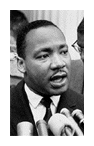
"If we are to have peace on earth ... our loyalties must transcend our race, our tribe, our class, and our nation; and this means we must develop a world perspective. No individual can live alone, no nation can live alone, and as long as we try, the more we are going to have war in this world. We must either learn to live together as brothers or we are all going to perish together as fools."
Martin Luther King, Jr. 1967
© Copyright 2005-2014, Scott E. Harris. All Rights Reserved.
Please do not reproduce or copy without the permission of the author.